Georgia Medical Board Addresses Questions Regarding APRN Protocol Agreements
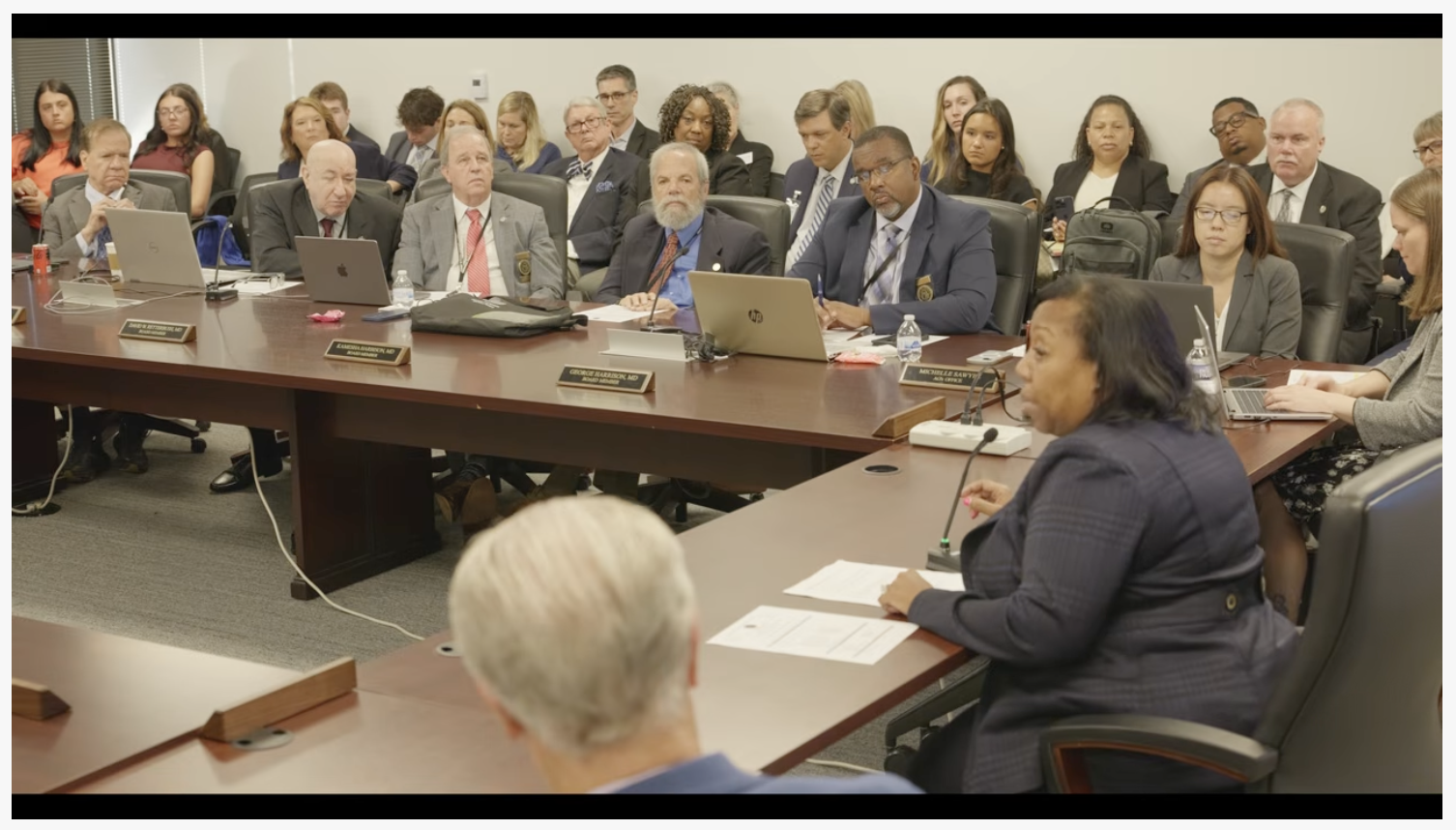
Former President of United Advanced Practice Registered Nurses of Georgia presenting a statement at June 4, 2026 meeting of the Georgia Composite Medical Board
The healthcare community has been closely watching developments involving the Georgia Composite Medical Board's interpretation of state laws governing Advanced Practice Registered Nurses (APRNs) who own or operate their own practices.
On May 9, 2026, the Medical Board issued a position statement addressing physician supervision and protocol requirements for APRNs and physician assistants. In it, the Board emphasized the legal requirement for APRN practices to have physician supervision. It went on to state that using a third-party service to connect APRNs with supervising physicians will not, by itself, resolve compliance concerns, and that Georgia law prohibits "a physician receiving compensation of any kind, monetary or non-monetary, from an APRN or an APRN-owned company in exchange for serving as the supervising or delegating physician." Because third-party physician matching companies and paid physician supervision arrangements are common in Georgia APRN-owned practices, many viewed the statement as a threat to their existing business models. The United Advanced Practice Registered Nurses of Georgia (UAPRN) posted that the Board’s statement posed “an immediate and serious risk to patient access to care across the state.” These concerns prompted many inquiries to the Board and even a protest organized by healthcare professionals at Liberty Square in downtown Atlanta, with the Board’s June 4th meeting being heavily attended by leaders in the medical community.
On June 5, 2026, the Medical Board released another statement and a follow-up document addressing what it described as "misinformation" surrounding these issues. The Board clarified that it is not requiring APRNs to close their practices or terminate existing protocol agreements. Instead, the Board maintains that its May statement only reflects its longstanding interpretation of Georgia law and was issued in response to an increasing number of questions and protocol applications that raised compliance concerns.
The Board’s clarification statement goes on to say that moving forward, it intends to closely examine physician-APRN relationships when reviewing protocol agreements to ensure independent medical judgment and a genuinely collaborative relationship between supervising physicians and advanced practice providers. Questions remain regarding how the Board’s interpretations will affect APRN practice structures, supervision arrangements, and future protocol approvals. The statement concludes with the Board acknowledging that discussions with stakeholders are ongoing and that additional guidance may be forthcoming as it works with the Georgia Boards of Nursing and Pharmacy to address these issues.
This article is provided for informational purposes only and does not constitute legal advice.